
Garage Door Opener Installers
New opener, quiet operation, and safety sensors set up right the first time, with same-day scheduling across the Kansas City area.
- ✓Same-Day Service
- ✓Licensed & Insured
- ✓On Call 7 Days
- ✓Free Estimates
Opener Installation Built Around Kansas City Homes
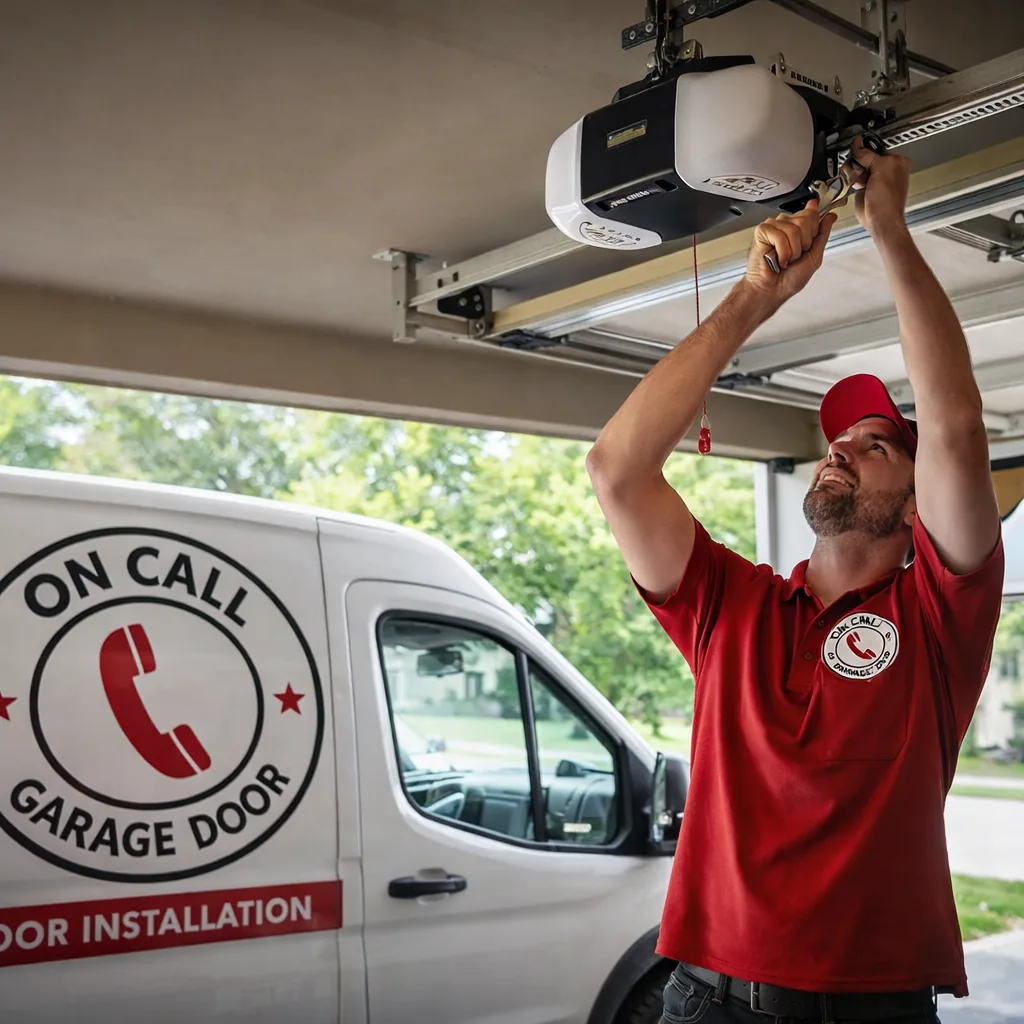
A garage door opener is a system, not a single part: motor unit, rail, trolley, drive mechanism, photo-eye sensors, and a wall control, all set to work together on a spring-balanced door. When any piece is mismatched, whether the horsepower is too light for an insulated door or the sensors sit at different heights, the opener strains, reverses on its own, or fails outright within a year or two.
On Call Garage Door Installation fits openers to the door in front of us. In older sections of the city like Waldo and Brookside, garages are often narrower and were built before automatic openers were standard, so headroom and mounting points need a closer look before the unit goes up. Out in Lee's Summit, Blue Springs, and the newer subdivisions off the Northland's growth corridors, garages tend to be wider two- and three-car bays with taller insulated doors that call for a stronger drive and a longer rail. We size the opener to the door, not the other way around.
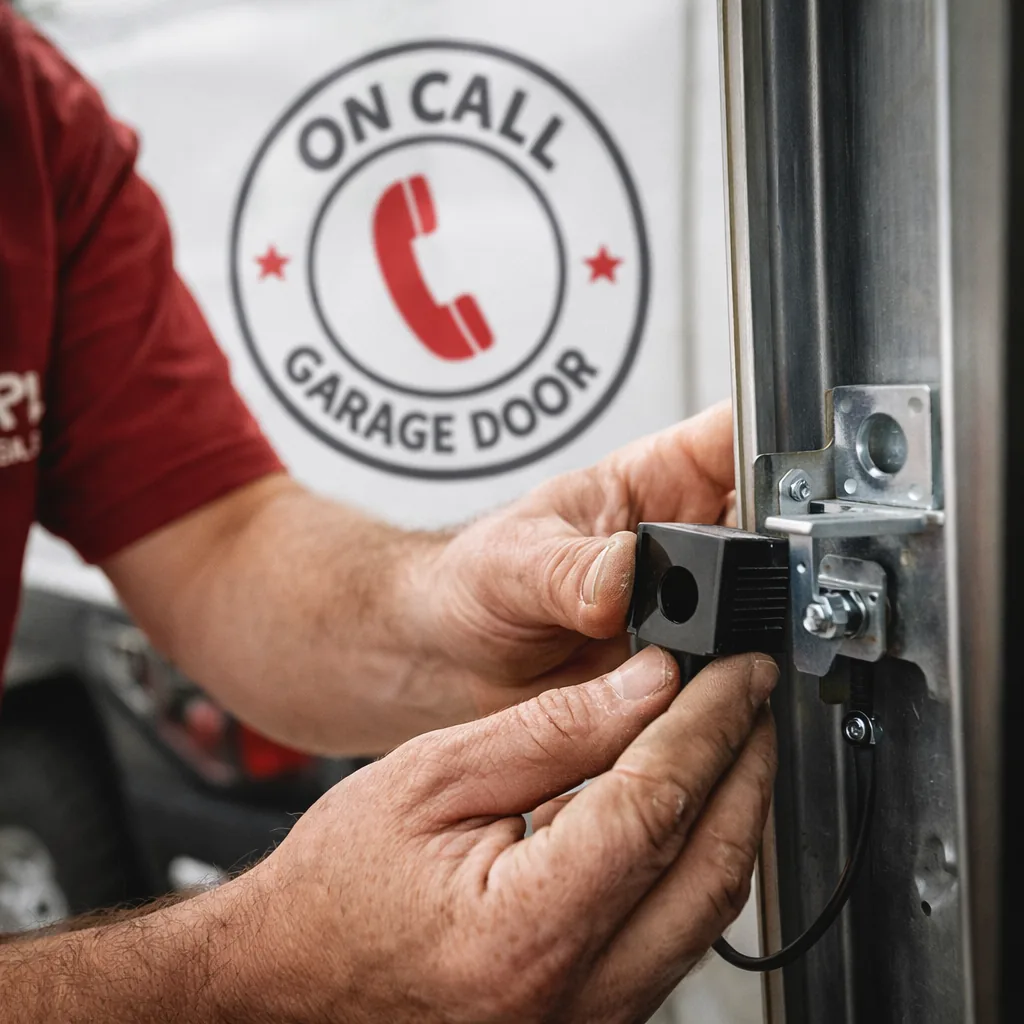
Federal law has required two independent entrapment protection systems on residential openers since 1993, most commonly a mechanical force sensor built into the motor plus a pair of photo-eye sensors mounted a few inches off the floor. We align those sensors on every install and test the reversal function before we leave, because a door that will not stop or reverse on an obstruction is not a finished job. If your current setup is already fighting you, our garage door opener repair technicians handle troubleshooting on existing units as a separate service from new installs.
Opener Types We Install
Belt-Drive Openers
A rubber belt replaces the chain, which cuts down on the rattle and vibration that carries into bedrooms above or beside the garage. This is our most common recommendation for attached garages.
Chain-Drive Openers
Metal chain pulls the trolley along the rail. It costs less than a belt-drive unit and holds up well for detached garages or workshops where noise is not a concern.
Jackshaft (Wall-Mount) Openers
Mounted beside the door on the torsion shaft instead of overhead, freeing up ceiling space for storage, a lift, or a shop area. Common in garages that double as workspace.
Smart, Wi-Fi Connected Openers
Smartphone control, activity alerts, and guest access codes, paired to your home network during install so you are not fumbling with an app after we leave.
Battery Backup Units
Keeps the opener functional through a power outage, which matters during Kansas City's spring storm season when downed lines are common.
Rolling Code Remotes and Keypads
Every remote we pair transmits a rolling code that changes with each use, so old signals cannot be captured and reused to open the door later.
How Opener Installation Works
On-Site Assessment and Written Quote
We check the door's spring balance, weight, and headroom, then give an upfront quote before any work begins. A door that is out of balance gets flagged, because no opener installs correctly on a door that is not balanced first.
Old Unit Removal and New Mounting
We remove the old motor and rail, reinforce the mounting bracket on the header if needed, and set the new rail and trolley to the manufacturer's spec.
Wiring, Sensor Alignment, and Safety Testing
Photo-eye sensors get aligned and tested, along with the force-sensing reversal system, before the door is cycled repeatedly to confirm smooth, consistent travel.
Remote Pairing and Walkthrough
We program your remotes, keypad, and any smartphone app, then walk through manual release, lock-out settings, and basic maintenance before we leave.
What Kansas City Homeowners Say
Our old chain-drive opener sounded like a garbage disposal every time it ran. The belt-drive unit they put in is so quiet my kids don't wake up when I leave for early shifts anymore.
They caught that our door was out of balance before installing the new opener and fixed the springs first instead of just bolting a motor onto a bad setup. That's the kind of thing you don't know to ask about.
Same-day appointment, showed up in uniform, explained the sensor placement, and had the smart opener linked to my phone before they left the driveway.
Garage Door Opener Installation Questions
What brand of garage door opener is the most reliable? +
Chamberlain, LiftMaster, and Genie are the three brands we install most and have the strongest reliability track record in the residential market. The right choice depends more on drive type, horsepower for your door's weight, and whether you want smartphone connectivity than on brand alone, and we walk through those tradeoffs during the quote.
How much should it cost to install a new garage door opener? +
Cost depends on drive type, horsepower, whether we're removing an old unit, and any extras like battery backup or smart connectivity. We give a free, upfront quote after seeing the door in person, and there is never a surprise charge added once work starts.
How does a big box store opener install compare to a specialist? +
Big box retailers like Home Depot and Lowe's typically subcontract opener installation to a local installer or handyman service, which means the crew and warranty support can vary from job to job. We employ our own background-checked technicians directly, so the person sizing your opener is the same person you'd call if something needs adjusting later, and every install carries our parts-and-labor warranty.
How long does garage door opener installation take? +
A straightforward swap onto an existing rail and bracket usually wraps up within a couple of hours, including sensor alignment and remote pairing. Jobs that require reinforcing the header, upgrading wiring, or correcting spring balance first take longer, and we'll flag that during the on-site assessment before starting.
Can I install a garage door opener myself? +
It's possible for a mechanically confident homeowner, but misaligned photo-eye sensors or an incorrectly set force-reversal system are safety defects, not just inconveniences, since federal entrapment protection standards exist for a reason. Most of our opener calls after a DIY install involve fixing sensor alignment or a door that won't reverse properly on contact.
Ready for a quieter, more reliable garage door opener?
Tell us about your current setup and we'll recommend the right drive type and horsepower for your door, with a free quote before anything is scheduled.