
Garage Door Sensor Repair
A blinking opener light and a door that won't close usually trace back to misaligned or failing safety eyes. We realign, clean, or replace them so the door closes reliably every time.
- ✓Same-Day Service
- ✓Licensed & Insured
- ✓On Call 7 Days
- ✓Free Estimates
Why Sensors Fail More Often Than People Expect
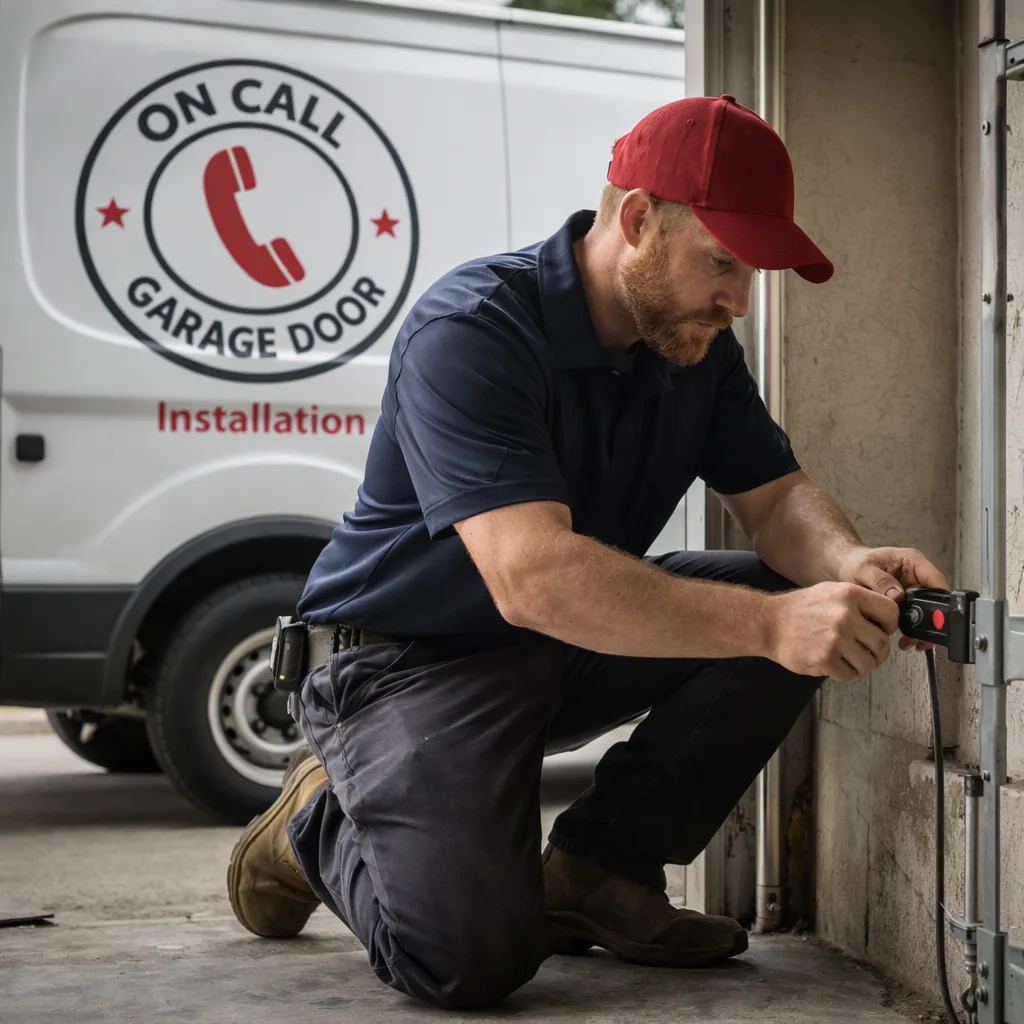
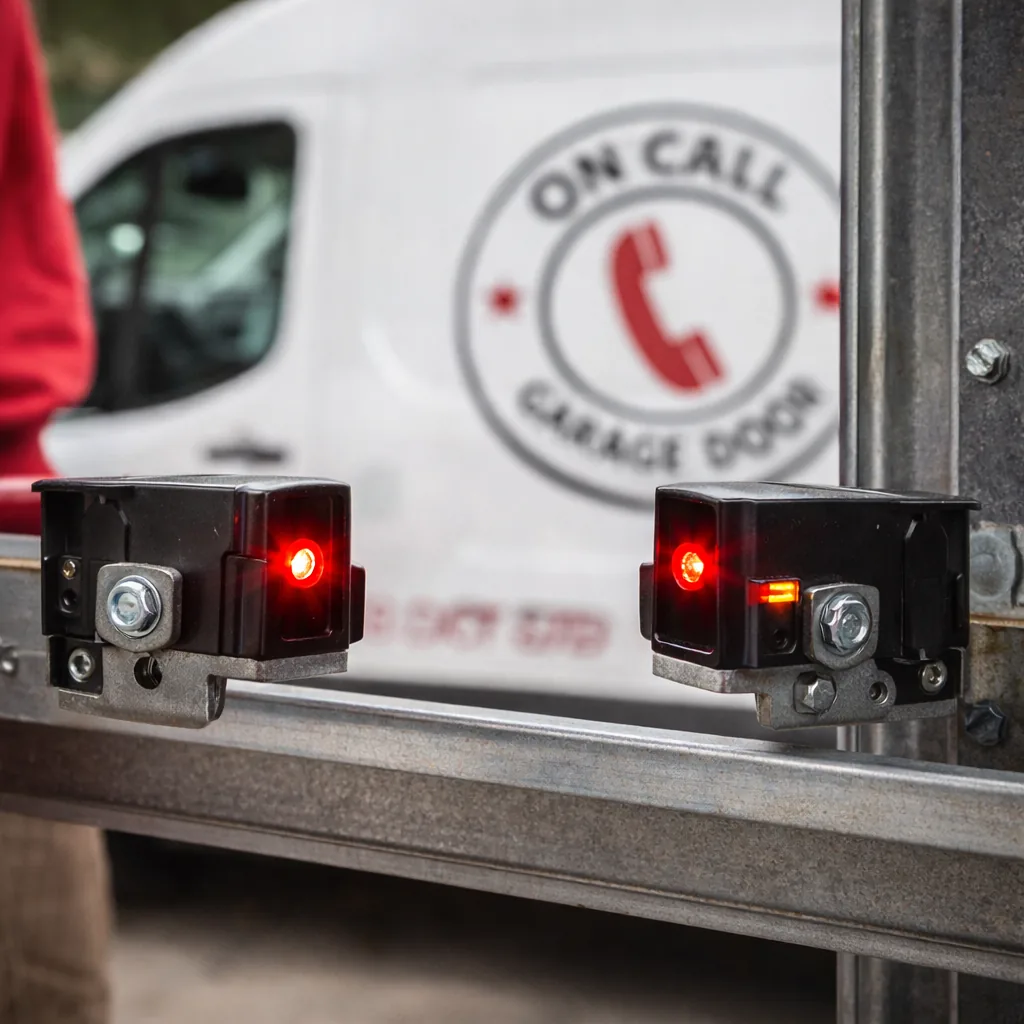
Photo-eye safety sensors sit low on either side of the door track, roughly six inches off the floor, where they're constantly exposed to whatever the garage floor throws at them. In the Kansas City area that means road salt and winter grit tracked in on tires, lawn debris in the summer, and the occasional bump from a bike, ladder, or parked car nudging the bracket out of alignment. Because the two sensors have to point at each other within a fraction of an inch to complete the safety circuit, even a small knock is often enough to stop the door from closing, since the opener is designed to refuse to shut if it can't confirm the beam is clear.
Seasonal temperature swings play a role too. As concrete slabs expand and contract through Kansas City's freeze-thaw cycles, the studs or brackets the sensors are mounted to can shift just enough to throw off alignment, especially in older garages where the mounting hardware has loosened over years of vibration from the door cycling. On Call Garage Door Installation handles sensor repair as its own visit or alongside a broader garage door service call, and because it's a quick diagnostic job, we're usually able to get to it same-day.
These sensors, often called safety eyes, became a required feature on residential garage door openers under a federal mandate that took effect in 1993, after too many injuries and deaths involving doors closing on people or pets. That's why an opener refuses to close the door at all once it detects a broken beam rather than just displaying a warning: the system is built to fail safe. Understanding that helps explain why a sensor issue can make an otherwise perfectly healthy door seem completely broken, and why it's worth ruling out before assuming the motor or drive system has failed.
What We Check During a Sensor Repair Visit
Alignment
We confirm both sensor eyes are level, facing each other directly, and mounted at matching heights, since even a slight angle mismatch breaks the beam.
Wiring and Connections
Frayed, pinched, or corroded wiring at the sensor terminals is a common cause of intermittent failures that come and go depending on temperature or humidity.
Lens Cleaning
Dust, cobwebs, and grime on the sensor lens can block the beam just as effectively as a physical obstruction, and it's often the simplest fix.
Bracket and Mounting Hardware
Loose or bent mounting brackets get re-secured or replaced so the alignment holds instead of drifting again within a few weeks.
Full Sensor Replacement
When a sensor's internal components have failed rather than just its alignment, we replace the unit with one matched to your opener's brand and wiring configuration.
Auto-Reverse Verification
After any sensor work, we test the door's auto-reverse response to confirm the full safety system, not just the sensors in isolation, is functioning correctly.
How a Sensor Repair Visit Goes
Describe the Symptom
Whether it's a blinking opener light, a door that reverses on its own, or one that won't close at all, tell us what you're seeing so we can narrow down the likely cause before we arrive.
Inspect Both Sensors
A technician checks alignment, wiring, and lens condition on both units, since a problem with either side stops the whole system from completing its circuit.
Realign or Replace
Most visits end with realignment and a bracket tightening; if a sensor's internal parts have failed, we swap it for a matched replacement on the spot.
Test the Full Cycle
We run the door through several open-close cycles to confirm the fix holds and the auto-reverse safety feature responds correctly to an obstruction.
What Kansas City Homeowners Say
The light kept blinking and the door wouldn't shut no matter what we tried. Turned out a sensor bracket had gotten bumped by a bike tire. Fixed in fifteen minutes.
Technician showed up on time, cleaned both lenses, tightened the brackets, and explained why it kept happening in the winter. Hasn't acted up since.
Garage Door Sensor Repair Questions
How much does it cost to have someone fix a garage door sensor? +
Sensor repair is one of the more affordable garage door fixes since it's usually a matter of realignment or a single low-cost part, but the exact cost depends on whether the sensor needs cleaning, a new bracket, or full replacement. We give a free, upfront quote before starting any work.
Can a handyman fix a garage door sensor? +
A general handyman can sometimes realign a sensor, but confirming the auto-reverse safety response is working correctly afterward takes specific testing that goes beyond a basic adjustment. Because this system exists to prevent the door from closing on a person, pet, or vehicle, we recommend a technician who tests the full safety circuit, not just the alignment.
What is the most common garage door sensor problem? +
Misalignment is by far the most common cause, usually from something bumping one of the brackets or from a garage floor shifting slightly with seasonal temperature changes. A close second is a dirty lens, which can block the beam even when the sensors are perfectly aligned.
Why does my garage door close partway and then reverse? +
This almost always means the sensors are detecting an obstruction that isn't really there, whether from misalignment, a dirty lens, or something briefly crossing the beam path like a pet or a low-hanging item on a shelf near the track. It's a safety feature working as intended, so the fix is finding and correcting whatever is triggering it.
Is it worth fixing garage door sensors or should I just replace the opener? +
Sensor issues are almost always fixable on their own and rarely mean the opener itself needs replacing. If your opener is showing other signs of age at the same time, like a failing motor or worn drive gear, it's worth having a technician assess both while they're already on site, and our garage door opener repair technicians can evaluate the full system in one visit.
Can bad sensors cause the whole garage door to stop working? +
Yes. Federal safety standards require the opener to refuse to close the door if it can't confirm the sensor beam is unobstructed, so a failed sensor can make the door appear completely broken even though the motor and track are fine. This is one of the more common reasons for a garage door repair call that turns out to be a quick fix.
How do I know if it's the sensors and not the opener itself? +
A steady, non-blinking light on both sensor units usually means the beam is connecting correctly, so if the opener still won't close the door with steady lights, the problem is more likely in the motor or logic board rather than the sensors. Most openers also show a distinct blink pattern on the wall control or motor unit specifically tied to a sensor fault, which narrows down the cause before a technician even arrives.
Door won't close because of a sensor issue?
Describe what the opener light is doing and we'll get a technician out to realign, clean, or replace the sensors so the door closes reliably again.