
Insulated Garage Door Installation
An insulated door holds temperature, cuts noise, and runs quieter through the day, a real upgrade for any attached garage in Kansas City’s swing from humid summers to freezing winters.
- ✓Same-Day Service
- ✓Licensed & Insured
- ✓On Call 7 Days
- ✓Free Estimates
Why Insulation Matters Here
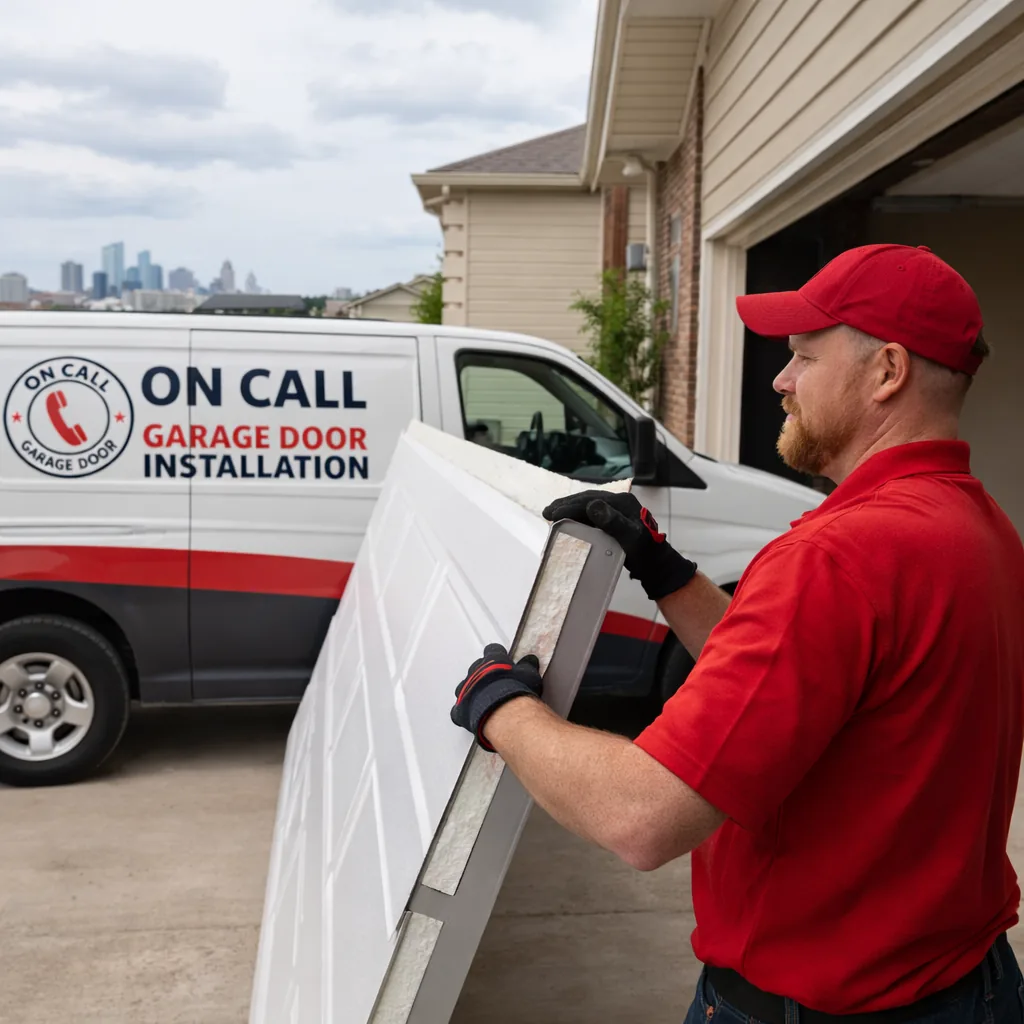
Kansas City runs a genuine range of seasons. Summers push into the 90s with real humidity, and winters bring stretches below freezing along with the occasional ice storm. A single-layer steel door, common on older homes across the Northland and many ranch-style builds from the 1960s and 70s, transfers that outside temperature almost directly into the garage. For an attached garage sharing a wall with a bedroom, laundry room, or finished space above, that swing shows up as a cold floor in January and a hot wall in July.
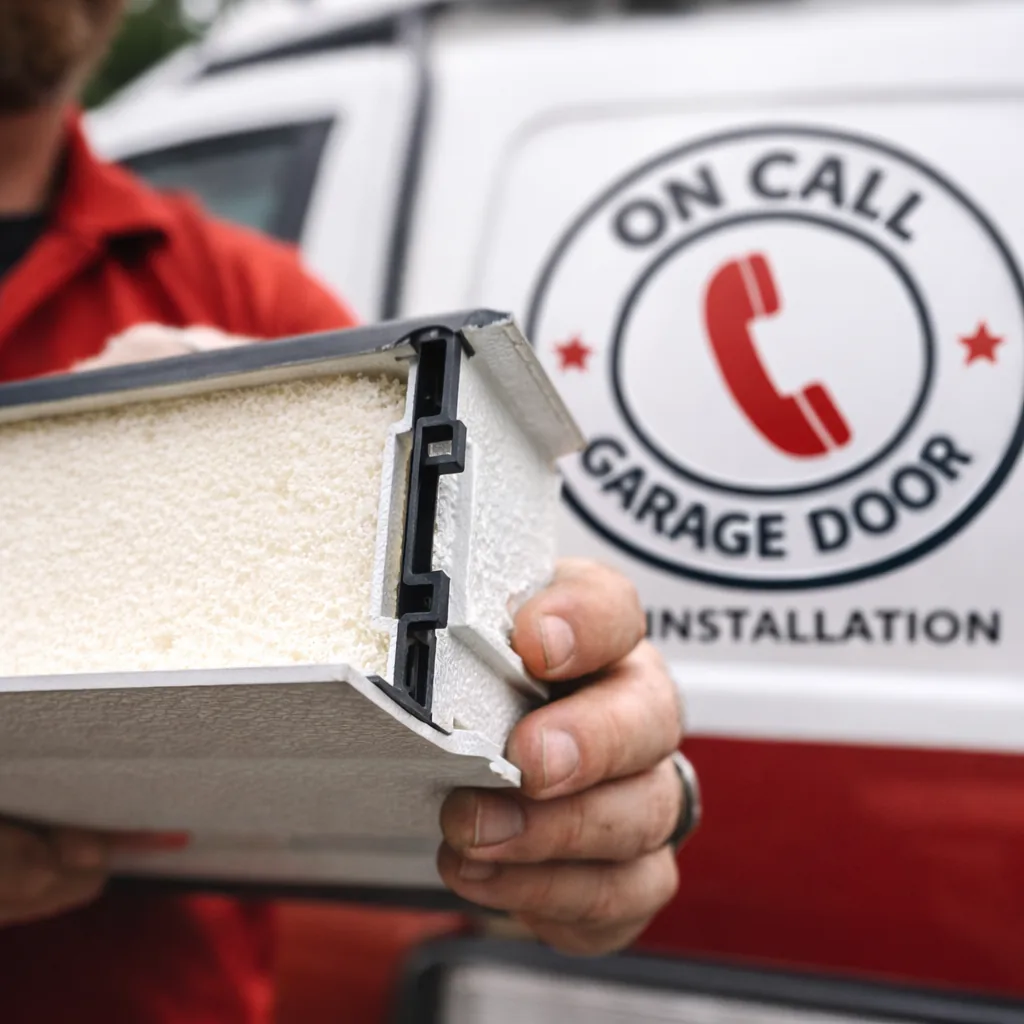
An insulated door uses a foam core, either polystyrene or the denser polyurethane, sandwiched between two steel skins, sometimes called double-wall or triple-layer construction. That core does two jobs at once: it slows heat transfer, measured by the door’s R-value, and it stiffens the panel enough to noticeably quiet the door’s operation. Homes in newer subdivisions around Lee’s Summit and Blue Springs, many built with three-car attached garages, see the noise difference especially, since a lighter uninsulated door tends to boom and rattle more during opening and closing.
Insulation also protects what’s stored in the garage. A single-layer door lets the space swing close to outdoor temperature, which is hard on stored paint, some tools, and anything else sensitive to freeze-thaw cycles or high summer heat. Homeowners who use the garage as a workshop or a home gym notice this most, since an insulated door keeps the space usable through more of the year instead of turning it into a sauna in July or an icebox in January.
Sound is the other benefit that surprises people after installation. A heavier, foam-filled panel simply doesn’t flex and vibrate the way a thin steel sheet does, so the door itself makes less noise going up and down, and it also blocks more outside street or lawn-equipment noise from passing through into an attached garage or the rooms next to it.
We hear the same question from a lot of homeowners: is the upgrade worth it on a home they’re not planning to stay in forever? Even on a shorter timeline, an insulated door tends to read as a real improvement to buyers touring the home, since it’s a visible, functional upgrade rather than something hidden behind a wall. On a home you’re staying in long term, the daily comfort and noise difference is usually the bigger draw.
What Comes With Installation
Foam-Core Construction
Polystyrene or polyurethane core between steel skins, rated by R-value, for real temperature and noise control that a single-layer door can’t match.
Weatherstripping & Seals
Bottom astragal and side seals fitted to close gaps that let heat, cold, and dust into the garage, which matters as much as the panel insulation itself.
Balanced Springs & Hardware
Insulated doors weigh more than single-layer steel, so springs and rollers are sized to match on installation instead of reusing hardware built for a lighter door.
Opener Compatibility Check
We confirm your existing opener can handle the added weight, or recommend an upgrade if it can’t, before the new door ever goes on the track.
Window & Style Options
Optional window inserts, panel textures, and colors so the insulated door still matches the home’s exterior rather than looking like a purely functional swap.
How Installation Works
Measure and assess the opening
We confirm the size, track condition, and whether the current springs and opener can handle an insulated door’s extra weight before quoting anything.
Review insulation and style options
R-value, panel design, and window options laid out plainly, matched to your home and how the garage actually gets used day to day.
Free, upfront quote
A clear number before any work starts, priced by the door size, insulation level, and hardware needed, with nothing added later.
Remove the old door and install the new one
Old panels and worn hardware come out; the insulated door, springs, and rollers go in and get balanced to the opening the same day in most cases.
Test for balance and noise
We run a full open-close cycle, check the seal at all edges, and confirm the door operates quietly before we consider the job finished.
What Kansas City Homeowners Say
I called three places and On Call was the only one who actually came out the same day. Fixed it right the first time.
Friendly crew who explained what was worn and what could wait. Honest work, and they stood behind it.
Insulated Garage Door Questions
What is the average cost to install an insulated garage door? +
It depends on the door’s size, R-value, and panel style, since insulated doors cost more upfront than single-layer steel but use less energy and run quieter over time. We walk through the cost to install a garage door and give a free, written quote before any work begins so you’re deciding with real numbers.
How much energy will an insulated garage door actually save? +
Savings depend on your garage’s exposure, current insulation, and whether it shares a wall with living space, so we don’t promise a specific number. What we can say is the difference is most noticeable in an attached garage during Kansas City’s summer heat and winter cold, when a single-layer door transfers outside temperature almost directly inside the shared wall.
Will an insulated door work with my current garage door opener? +
Sometimes, but insulated doors weigh more than standard steel, so we always check your opener’s rated capacity during the estimate. If it can’t handle the added weight, we’ll tell you before installation rather than after, and price the opener upgrade separately so it’s your decision.
How long does insulated garage door installation take? +
A standard single-door installation typically finishes in a few hours once our crew is on site, similar to a standard replacement, though a nonstandard size or an opener upgrade can add time. We’ll give you a realistic window before the crew starts.
Is an insulated door worth it if my garage is detached? +
It still helps with temperature swings and noise, but the payoff is smaller than for an attached garage sharing a wall with living space. We’re honest about that during the consultation instead of upselling insulation you won’t notice as much, and we’ll say so plainly if a standard steel door is the better value.
Do insulated doors need different maintenance than standard steel doors? +
Not really. The seals and weatherstripping benefit from an occasional check since they’re doing more work holding out temperature, but the panels, track, and hardware are maintained the same way as any other quality steel door. Regular garage door service keeps everything, insulated or not, operating smoothly.
What R-value should I look for in an insulated garage door? +
Higher R-value generally means better temperature control, but the right level depends on whether your garage is attached, how it’s used, and your budget. We walk through the practical difference between the common R-value tiers during the estimate instead of pushing the highest number regardless of whether you’d notice it.
Can an existing steel door be retrofitted with insulation instead of replaced? +
In some cases a lightweight foam insulation kit can be added to an existing single-layer door, but it won’t match the performance or the tighter seal of a door built with insulation from the start. For most doors that are otherwise aging or showing wear, a full insulated replacement ends up being the better long-term choice, and we’ll be upfront about which situation yours is.
Ready for a quieter, better-insulated garage?
Tell us about your current door and how the garage is used, and we’ll walk you through insulation options and a free upfront quote. Background-checked, uniformed technicians call ahead and handle most installs the same day.